|
"Honesty and openness are sometimes undervalued traits - many would prefer to hide the past, rather than to allow others
to freely and publicly record it for all to see. By creating an iKarma Profile, Loron's Astronomy Mall has demonstrated a
firm commitment to maintaining a responsible and sincere reputation online. Such people, both rare and precious, are a credit
to both business and society. We believe that integrity should be rewarded. The iKarma team is happy to welcome Loron Knowlen's Astronomy Mall to
our service."
CLEAR NIGHTS FORUM
Do you know what FOO FIGHTERS are? Watch the movie to find out.

THE ARCHENHOLD OBSERVATORY, Berlin Germany
STEP INSIDE AN ONL-LINE OBSERVATORY
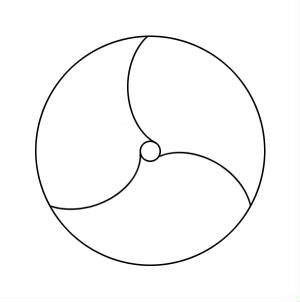
LEARN ABOUT THE 3 VANE CURVED SPIDER FOR REFLECTORS by ALBERTO MONTALVO, Burbank, California
WELCOME TO MY MALL
WELCOME TO MY PHOTO ALBUM

(CLICK HERE)
GET THE LATEST SPACE NEWS (enterprisemission.com)
|
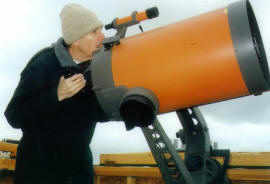
| CELESTRON C-14 SCT TELESCOPE |
Welcome to my on-line "Astronomy Mall". I hope the information contained here at my website
will be most helpful to you in your selection of a telescope or other accessory related to astronomy.
These items seen here at this on-line mall can be most expensive which is why you should
do as much research as you can. I have set up links here that represent long-standing individuals along with well-known firms
that have been in business for many years. They are all very fine products. I know because I use some myself.
TELESCOPES, BINOCULARS, and their related accessories along with STAR CHARTS, BOOKS,
and much more...
|
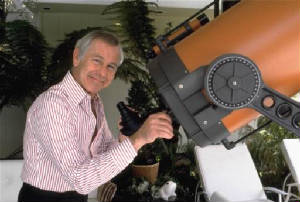
| JOHNNY CARSON WITH HIS CELESTRON C-14 SCT. HE ALSO HAD A UNITRON REFRACTOR & QUESTAR 3.5 |
|
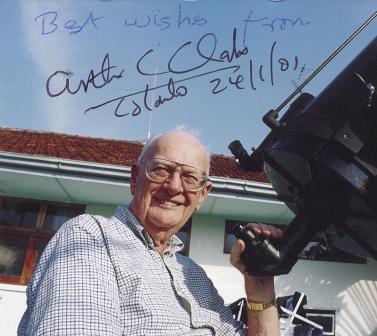
| ARTHUR C. CLARCK WITH HIS CELESTRON C-14 TELESCOPE. |

Leonard Rosenman (September
7, 1924 – March 4, 2008) was an American film, television and concert composer who won two Academy Awards. He also owned
a Celestron Compustar C-14 which I saw at his home in the Hollywood Hills. He knew my step-grandfather who was concert master
of MGM in the 1940's-50's |
LEARN ABOUT TELESCOPES
TESTING THE OPTICS
OF YOUR TELESCOPEYou will gain experience in using your telescope especially if you direct your
attention to the main points of quality. You will find in time that you will become critical of imperfections of your telescope,
casual or inherent. When you test your telescope's optics, you should be careful and pay close attention to your own eyesight
and be guided by proper directions and only then will you have a good idea of the quality of your telescope. Remember that
no telescope will give the most perfect image. Your telescope is good when you can see fine definition and not to worry about
the out of focus star image. If there seems to be a problem with the telescope because of the star image, you can not say
what the problem is until you make an examination of the out-of-focus image on a night fine enough to allow you to make a
star test at high power, unless the fault is because of a astigmatism, maladjustment, or centering of the optics and on a
good night these can be seen at focus.
ON-LINE OBSERVATORY
MT. WILSON OBSERVATORY ASSOCIATION
|
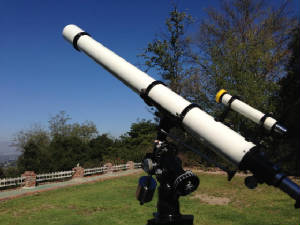
| UNITRON REFRACTOR |
UNITRON REFRACTOR
LORON'S
ASTRONOMY
MALL
OF LOS ANGELES, CALIFORNIA
|
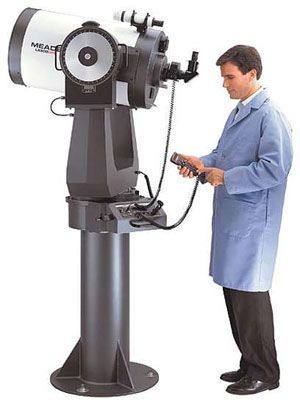
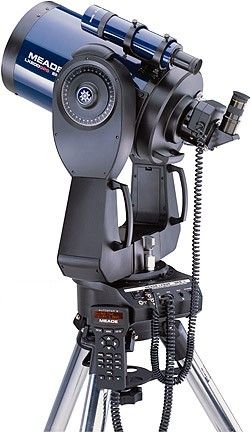
| MEADE 8-inch F/10 SCT TELESCOPE SYSTEM |
WATCH FOR MY VIDEOCAST
SOON TO BE AT
YOU TUBE
On-line Observatory Lectures
Product Demonstrations &
Reviews
and lots of other fun stuff
too.....
|
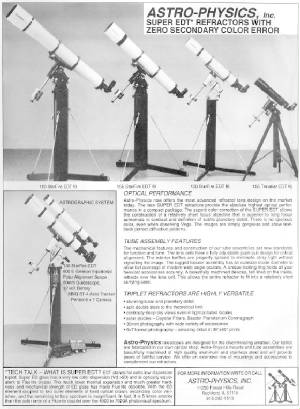
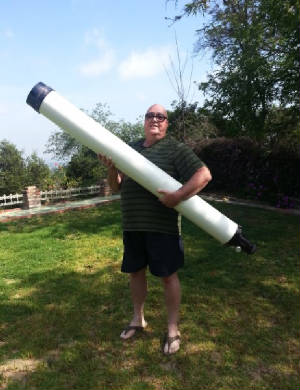
| 6" F/12 ASTRO-PHYSICS REFRACTOR |
ASTRO-PHYSICS REFRACTOR
I CAN HELP YOU FIND ZEISS!
ZEISS CATALOGS
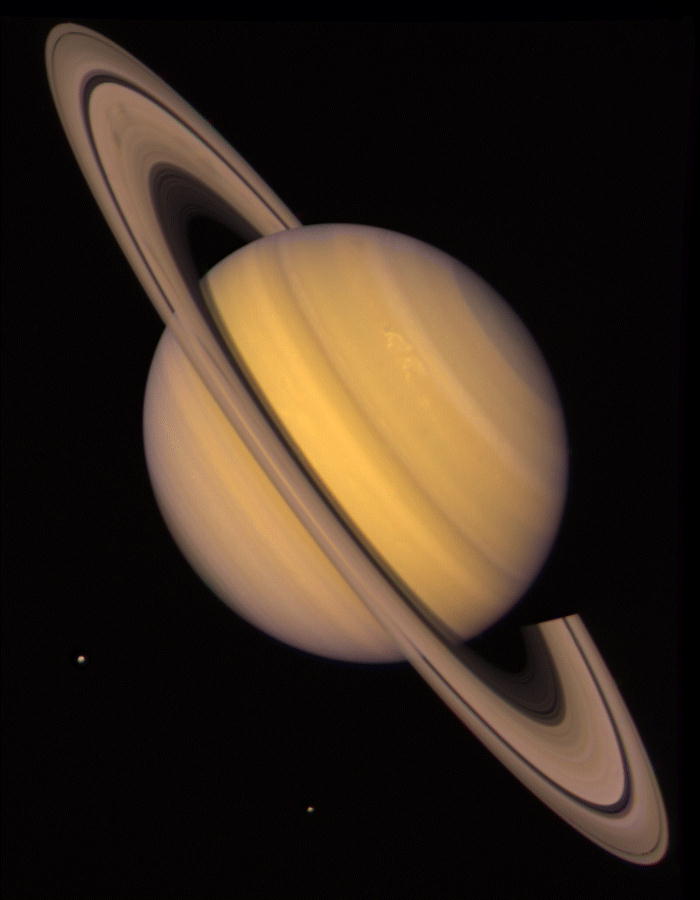
UFO NEAR WORLD TRADE CENTER, N.Y., NY. PRE 9/11
Well yes
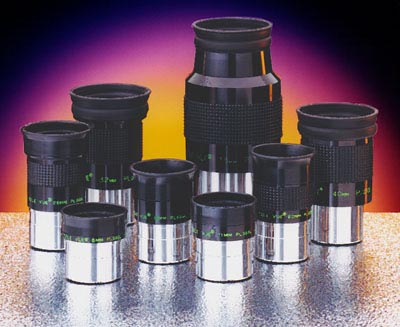
we have used them all. At first we would refer you to both Zeiss & Clave but they are very rare. For planetary,lunar,
and solar observing we enjoy the Brandons which we use on our 6" refractor at the observatory. However what we like the most
is the Lumicon 2" diag., Filters from William optics but the best eyepieces to use on a large aperture Celestron/Mead SCT.
are the 2" Meade 40mm SWA, Televue 2" 20mm Nagler, and either the Meade 8.8 SWA or the Televue 2" 9mm Nagler. We also enjoy
the classic 26mm Plossl from Celestron. For the Bino-viewer we enjoy the views through the classic Tuthill. Hope the information
will help one in the selection of fine accessories for their telescope. Remember however the Brandons are the best! Happy
skies everyone.

TEXAS NAUTICAL REPAIR (Telescopes)
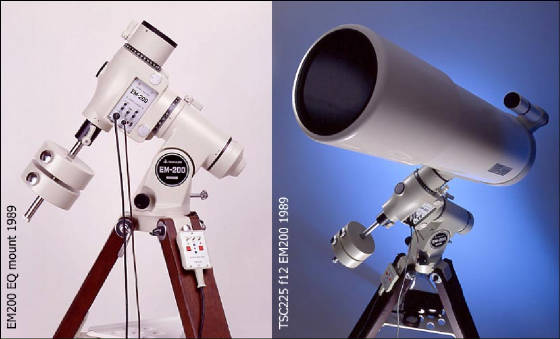
| RELEASED IN 1989 |
|
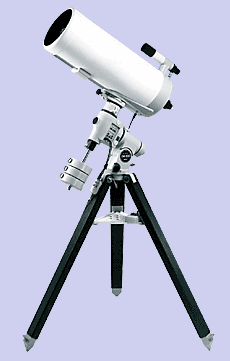
| THE 9-INCH F/12 TAKAHASHI SCT SYSTEM |
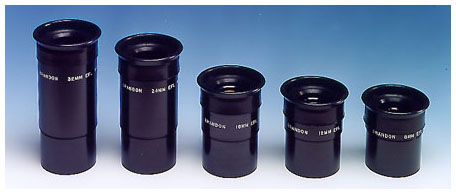
BRANDON EYEPIECES
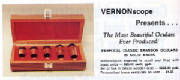
Brandon is a brand name of VernonScope,
and is applied to a variety of products, including a well-established line of eyepieces. Several of the short- to medium focal-length
Brandon eyepieces are advertised as orthoscopics, yet they appear upon disassembly to resemble Plossls. They use four lenses
in an unsymmetrical duplet formulation designed by Chester Brandon, one of the designers of the top-secret Norden bombsight,
which played an important role in World War II.
Brandon eyepieces are a popular choice of professional astronomers
worldwide. VernonScope estimates that over one million Brandons in various incarnations and focal lengths have been produced
since their introduction in the early 1940s. Designed for medium to high power use with any telescope at focal ratios down
to f/4, they are very sharp at the center (although somewhat less so at the edges) and ideally suited to lunar, planetary,
star cluster, and binary star observing. They have excellent color correction and very low astigmatism, with very minor field
curvature and ghosting. They are fully coated, but not multicoated, in order to reduce a phenomenon known as "narrow angle
light scatter" that is sometimes seen in multicoated optics. This scatter shows as a loss of contrast and subtle details within
bright objects such as Venus, Mars, and Jupiter. It also shows as a significant difference in the background darkness immediately
surrounding a bright object, which is especially important for double-star observing. Brandons are accordingly noted for their
exceptional contrast and extremely dark background, two reasons why Questar has been using them in their ultra-premium Maksutov-Cassegrain
scopes since 1971. They have moderately wide apparent fields of view, of about 45°.
Brandons are threaded for
Vernonscope filters only. The use of standard eyepiece color or nebula filters requires adapter 3405. They have rubber eyecups
that roll down for eyeglass use, although their eye relief is quite short in the shorter focal lengths. Brandons are the sharpest
design currently available in a 1.25" barrel size for eyepiece projection photography
Encyclopedia of Science
|
|
| CURVED SPIDER VANE BY ALBERTO MONTALVO |
The f/number
(focal ratio) of any telescope tells two things about the telescope and that is it's intended purpose and it's photographic
performance. The brightness of a star depends on the telescope's aperture not the telescope's f/number. All telescopes of
the same aperture at any magnification will show the same visual brightness. There are many that insist their long focal ratio
telescope gets higher contrast, this is not correct. A refracting telescope does have more contrast than any other because
of it's optical system not because of the f/ratio. You can see that when you are comparing very well made and very well corrected
refractors, you will see there is no gain in contrast regardless of the f/ratio of each telescope. Even if a reflecting telescope
is well made and has the same size secondary mirror obstruction as another, it will have the same contrast regardless of the
f/number of each telescope. All of the confusion and there is much on this issue, is because of the photographic use of the
f/number. A faster f/ratio does mean brighter images on film but not in a telescope. Aperture not f/ratio is the important
factor with a telescope. Some photographers have a great deal of trouble with this concept. The f/number of any objective
lens or a mirror of a telescope has nothing to do with the visual brightness of an image, the bigger the aperture the better.
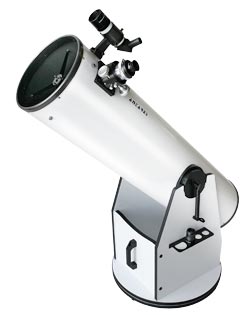
| THE MAONTALVO 12-INCH F/17 DOBSONIAN CONCEPT |
|
| BURBANK OPTICAL COMPANY |

|
| 12" F/17 Zeiss Refractor with Series E objective lens. |
THE ZEISS B OBJECTIVE LENS "B" Type Zeiss Objective.
The Zeiss B was the first truly successful apochromatic objective along with the Cooke Photo-Visual, I believe. Zeiss did
make the apochromatic A objective, but the glass was not stable and tended to accumulate large amounts of fungus. I do not
think that there are any useable A Objectives left. The B Objective came in focal lengths between f11, and f15, and I think
in the neighborhood of f17.5-19 at their longest. The longer focal lengths were considered to be fully apochromatic (by Abbe's
definition), with the f11 being considered a "half" or semi-apochromat by Zeiss.
GREAT READINGS FROM DANIEL MOUNSEY (CLICK HERE)
VISIT THE GRIFFITH OBSERVATORY
WHY A 6 INCH
F/15 REFRACTOR?Why a 6-inch F/15 Refractor? From my years of experience as an astronomer who
has used a variety of telescopes of different types along with using very rare large apertures of 8-12 inches. I have found
the 6 inch F/15 refracting telescope is the optimum design for lunar, planetary, and solar observing. The telescope's size
makes it the best instrument in my opinion for advanced observers to use and simple enough for elementary observers to use
for their viewing. An observer can master the telescope system with relatively few instructions, and yet the system is large
enough to provide optimum viewing in city astmospheric conditions. Furthermore for more advanced observing the 6" F/15 refractor
with it's accessories provides opportunities for photographic and spectroscopic work as well. Observatories and educational
institutions usually have found the 6-inch F/15 refractor to be the finest instrument for lunar, planetary, and solar observing.
For those wanting to build a 6" F/15 refracting telescope system for their observing should obtain a copy of "Telescope Making#44"
and read the article entitled "Constructing a Large Brass Refractor" by Larry Myers. Telescope Making was a publication of
Kalmbach Publishing Company (Astronomy Magazine)
|